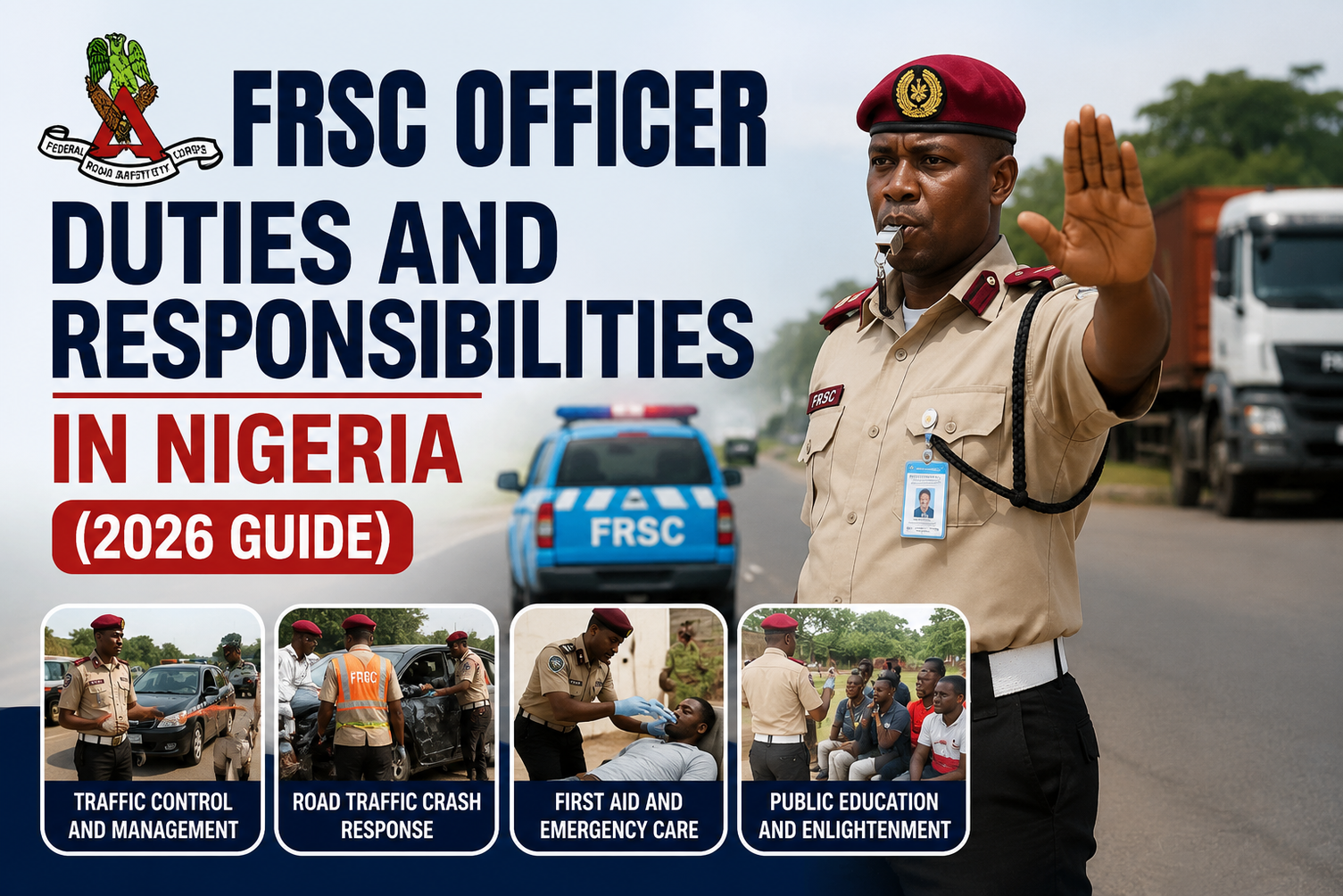
FRSC Officer Duties and Responsibilities in Nigeria (2026 Guide)
Are you planning to join the Federal Road Safety Corps (FRSC) or simply want to understand what FRSC officers actually do, this guide explains their duties, responsibilities, emergency response role, and why they are important to road safety in Nigeria.
Many people believe FRSC officers only stop vehicles and issue traffic fines. In reality, their responsibilities go far beyond traffic enforcement. They help prevent road crashes, educate motorists, rescue accident victims, provide basic first aid, manage traffic during emergencies, and enforce road safety regulations across the country.
Whether you are preparing for FRSC Recruitment 2026, researching the career, or simply curious about the Corps, this guide explains the daily responsibilities of an FRSC officer in simple terms.
What is the Federal Road Safety Corps (FRSC)?
The Federal Road Safety Corps (FRSC) is Nigeria’s lead agency responsible for promoting road safety, reducing road traffic crashes, enforcing traffic laws, and protecting lives on the nation’s highways.
Established by the Federal Government, the Corps works with other security and emergency agencies to create safer roads through enforcement, public education, rescue operations, and traffic management.
What Does an FRSC Officer Do?
An FRSC officer is responsible for ensuring that Nigerian roads remain safe for motorists, passengers, cyclists, and pedestrians.
Depending on their unit or department, officers may carry out road patrols, inspect vehicles, respond to emergencies, educate the public on road safety, investigate crashes, or coordinate traffic during busy periods.
Their work combines law enforcement, public safety, rescue services, and community education.
FRSC Officer Duties and Responsibilities
1. Enforcing Traffic Laws
One of the primary responsibilities of an FRSC officer is ensuring that motorists comply with Nigeria’s traffic regulations.
Officers monitor highways, identify traffic violations, and take appropriate enforcement action where necessary. This helps reduce reckless driving and promotes safer road use.
2. Traffic Control and Management
FRSC officers manage traffic flow during:
- Heavy congestion
- Road construction
- Public events
- Vehicle breakdowns
- Emergency situations
- Major accidents
Proper traffic management helps reduce delays and minimizes the risk of secondary crashes.
3. Road Traffic Crash Rescue Operations
FRSC officers are often among the first emergency responders to arrive at accident scenes.
Their responsibilities include:
- Securing the accident area.
- Assisting injured victims.
- Coordinating rescue efforts.
- Contacting emergency medical services.
- Preventing additional accidents around the crash scene.
4. Providing Basic First Aid
One of the most important responsibilities of FRSC officers is providing basic first aid to accident victims before medical professionals arrive.
Depending on the situation, officers may:
- Assess injured victims.
- Control severe bleeding.
- Help keep victims safe until ambulances arrive.
- Support emergency evacuation.
- Coordinate with healthcare workers.
Although FRSC officers are not doctors or nurses, they receive basic emergency response training that enables them to provide immediate assistance during road traffic emergencies.
5. Public Road Safety Education
FRSC officers educate Nigerians on safe road use by:
- Organizing awareness campaigns.
- Visiting schools and communities.
- Teaching defensive driving practices.
- Promoting seat belt use.
- Encouraging responsible driving behaviour.
- Raising awareness about speeding and drunk driving.
Education remains one of the Corps’ most effective tools for preventing road crashes.
6. Vehicle Inspection
FRSC officers may inspect vehicles to ensure they meet road safety requirements.
During inspections, they may check:
- Vehicle documentation.
- Tyre condition.
- Lights and indicators.
- Braking system.
- Windscreen visibility.
- Safety equipment where applicable.
The goal is to identify potential safety risks before they contribute to road accidents.
7. Accident Investigation and Reporting
After a road traffic crash, FRSC officers help gather important information that can assist in understanding how the incident occurred.
Their responsibilities may include:
- Documenting the accident scene.
- Recording details of the vehicles involved.
- Collecting statements from drivers or witnesses where appropriate.
- Preparing official reports.
- Working with other relevant authorities during investigations.
Accurate reporting helps improve road safety planning and supports lawful investigations.
8. Patrol and Highway Monitoring
Routine patrols are one of the most visible duties of FRSC officers.
During patrol operations, officers monitor highways to:
- Identify dangerous driving behaviours.
- Detect road hazards.
- Respond quickly to emergencies.
- Assist stranded motorists.
- Ensure smooth traffic movement.
Regular patrols also serve as a deterrent to traffic violations and reckless driving.
9. Supporting National Events and Special Operations
FRSC officers are often deployed during major national events, festive periods, and other occasions when traffic volume increases significantly.
Their responsibilities may include:
- Managing traffic around event venues.
- Coordinating vehicle movement.
- Assisting emergency response teams.
- Supporting public safety operations.
- Working with other government agencies to maintain order on major roads.
10. Working with Other Emergency and Security Agencies
Road safety often requires collaboration between multiple organisations.
FRSC officers regularly work alongside agencies such as:
- Nigeria Police Force (NPF)
- Federal Fire Service (FFS)
- National Emergency Management Agency (NEMA)
- State Emergency Management Agencies (SEMAs)
- Ambulance and healthcare providers
- Other relevant government authorities
This coordinated approach helps improve emergency response and public safety during road traffic incidents.
Skills Every FRSC Officer Should Have
Meeting the educational requirements is important, but developing the right skills can make an officer more effective on the job.
Good Communication Skills
FRSC officers interact with motorists, passengers, and members of the public every day. Clear communication helps officers give instructions, educate road users, and manage difficult situations professionally.
Physical Fitness
Operational duties may require standing for long hours, controlling traffic, responding to emergencies, and working outdoors in different weather conditions.
Problem-Solving Ability
Every road incident is different. Officers must assess situations quickly and make sound decisions to protect lives and keep traffic moving safely.
Teamwork
Road safety operations often involve working closely with colleagues and other emergency agencies. Strong teamwork helps ensure coordinated and effective responses.
Integrity and Professionalism
FRSC officers are expected to enforce traffic laws fairly, respect the rights of road users, and maintain public confidence through ethical conduct.
Challenges FRSC Officers Face
Like many public service careers, working with the Federal Road Safety Corps comes with responsibilities and challenges.
Some of the common challenges include:
- Responding to serious road traffic crashes.
- Working during weekends, holidays, and night shifts.
- Exposure to difficult weather conditions.
- Managing heavy traffic during peak periods.
- Dealing with impatient or non-compliant road users.
- Maintaining professionalism under pressure.
Despite these challenges, many officers find satisfaction in contributing to safer roads and helping to save lives.
Why the Work of FRSC Officers Matters
Every day, FRSC officers play an important role in reducing road crashes and improving public safety across Nigeria.
Through traffic law enforcement, road safety education, emergency rescue, and collaboration with other agencies, they help protect motorists, passengers, and pedestrians.
Their work supports safer transportation and contributes to national development by promoting responsible road use.
What Should New FRSC Recruits Expect?
If you are successful during the FRSC recruitment process, you should be prepared for training before you begin active duty. The training is designed to help new recruits understand the job and prepare them for the responsibilities ahead.
During training, new recruits may learn about:
- Road safety rules and traffic laws.
- Traffic control and management.
- Basic first aid and emergency response.
- Physical fitness and drills.
- Discipline and teamwork.
- Professional conduct and ethics.
- Communication and public relations.
- Rescue procedures and accident response.
Training can be physically and mentally demanding, so recruits should be ready to learn, follow instructions, and work as part of a team.
Common Misconceptions About FRSC Officers
Many people have the wrong idea about what FRSC officers do. Here are a few common misconceptions:
“FRSC officers only issue fines.”
No. Although they enforce traffic laws, they also rescue accident victims, manage traffic, educate road users, and help make Nigerian roads safer.
“FRSC officers are medical personnel.”
No. FRSC officers are not doctors or nurses. However, they receive basic first aid training so they can assist accident victims before medical professionals arrive.
“The job is only about standing on the road.”
No. FRSC officers also carry out patrols, attend safety campaigns, inspect vehicles, prepare reports, and support emergency operations.
Tips for People Who Want to Join FRSC
If you plan to apply for future FRSC recruitment, these tips can help you prepare:
- Stay physically fit because the job can be demanding.
- Keep your educational and personal documents ready.
- Learn about the duties of the Corps before applying.
- Improve your communication and computer skills.
- Follow only official FRSC recruitment announcements.
- Avoid anyone asking you to pay money for recruitment.
Preparing early can make the application process easier and help you feel more confident.
Frequently Asked Questions (FAQs)
What does an FRSC officer do?
An FRSC officer helps enforce traffic laws, controls traffic, rescues accident victims, provides basic first aid, educates road users, and works to improve road safety across Nigeria.
Do FRSC officers provide first aid?
Yes. FRSC officers receive basic first aid training to help accident victims before medical personnel arrive.
Can FRSC officers stop vehicles?
Yes. FRSC officers can stop vehicles while carrying out their lawful duties, such as traffic enforcement, safety inspections, or routine patrols.
Is physical fitness important for FRSC officers?
Yes. Physical fitness is important because officers may spend long hours on patrol, manage traffic, respond to emergencies, and take part in rescue operations.
What skills should an FRSC officer have?
Good communication, teamwork, discipline, problem-solving, integrity, and basic computer knowledge are all useful skills for an FRSC officer.
Is the work of an FRSC officer risky?
Like many public safety jobs, FRSC officers may face challenging situations, especially during road crashes and emergency rescue operations. Proper training and teamwork help them carry out their duties safely.
Conclusion
Being an FRSC officer is about more than enforcing traffic laws. It is a career built on public service, discipline, and saving lives.
From managing traffic and educating road users to responding to road crashes and providing basic first aid, FRSC officers play an important role in making Nigerian roads safer.
If you are considering a career with the Federal Road Safety Corps, understanding these duties and responsibilities will help you know what to expect and prepare for future recruitment.
Related Guides: